
Funkstown · Maugansville
Williamsport Cabinet Quote Preparation in Williamsport
Bring your project details together before considering a cabinet purchase.
Send my cabinet inquiry
Or call (562) 203-3232. Calls only, we do not receive text messages.
A Williamsport cabinet purchase can be planned room by room, with each space at a different decision stage. Hagerstown Cabinet Exchange provides independent buying information to help you organize those stages and prepare a coherent inquiry. Identify the goods you want, the room conditions that still need checking and the people who must approve the purchase before setting an order in motion.
- Independent buying guidance
- Product inquiries
- Seller availability confirmed separately

Cabinet purchase preparation in Williamsport
This guide uses Williamsport municipal planning material as local context while keeping the product decisions tied to your actual project. Submitted form information is recorded for the site owner to review, without automatic seller transmission or a guaranteed response. A useful first record can include unresolved choices; it should explain them clearly rather than imply the room or order is already approved.
About Hagerstown Cabinet Exchange
Know who handles each part
Independent cabinet buying information and quote-request service. We do not manufacture, stock or install cabinets. A referral, supplier response, appointment or purchase is not guaranteed. Product availability, delivery and installation must be confirmed directly with the seller or separately engaged contractor.
Start with town context and a specific room question
The Town of Williamsport maintains a municipal comprehensive plan page and publishes plan materials through Town Hall. That is the narrow local fact established by the supplied research. The page provides a source of town planning context without deciding what cabinet configuration belongs in an individual room.
The practical buying inference is to separate community questions from purchase questions. Use the appropriate town or property source when a project-specific matter requires it, then keep the cabinet inquiry focused on the room, order address, receiving responsibility and final measurement approval. A question about the property and a question about a pantry unit need different information and may need different people to answer them.
Begin your own record by naming the room and the decision you are trying to make. A kitchen replacement, added pantry storage and a vanity purchase are distinct scopes. If you are considering more than one, give each a separate list. The positive use of local context is knowing where that context comes from while keeping the purchasing record specific enough to be evaluated on its own.
Distinguish product selection from room readiness
A selected door style does not mean the room is ready for an order. Record the current stage for each space: exploring the arrangement, checking dimensions, comparing named products or reviewing a final proposal. A seller can then see whether you are asking an early question or seeking pricing against a completed schedule.
Consider a hypothetical Williamsport buyer preparing both a kitchen and a bathroom purchase. The kitchen may have a checked arrangement and selected appliances while the vanity still needs compatibility review. Keep those statuses separate. The kitchen schedule should not be held out as evidence that the bathroom is equally ready, nor should the unfinished vanity details be quietly treated as approved.
Identify any other work that must be completed before final measurements or receipt. Ask the party responsible for that work to confirm the relevant condition. Do not invent a completion date or assume a seller will hold goods until the room is ready. A room readiness list lets you ask about actual timing and terms without presenting an unfinished sequence as a guaranteed plan.
Use storage priorities to organize the product alternatives
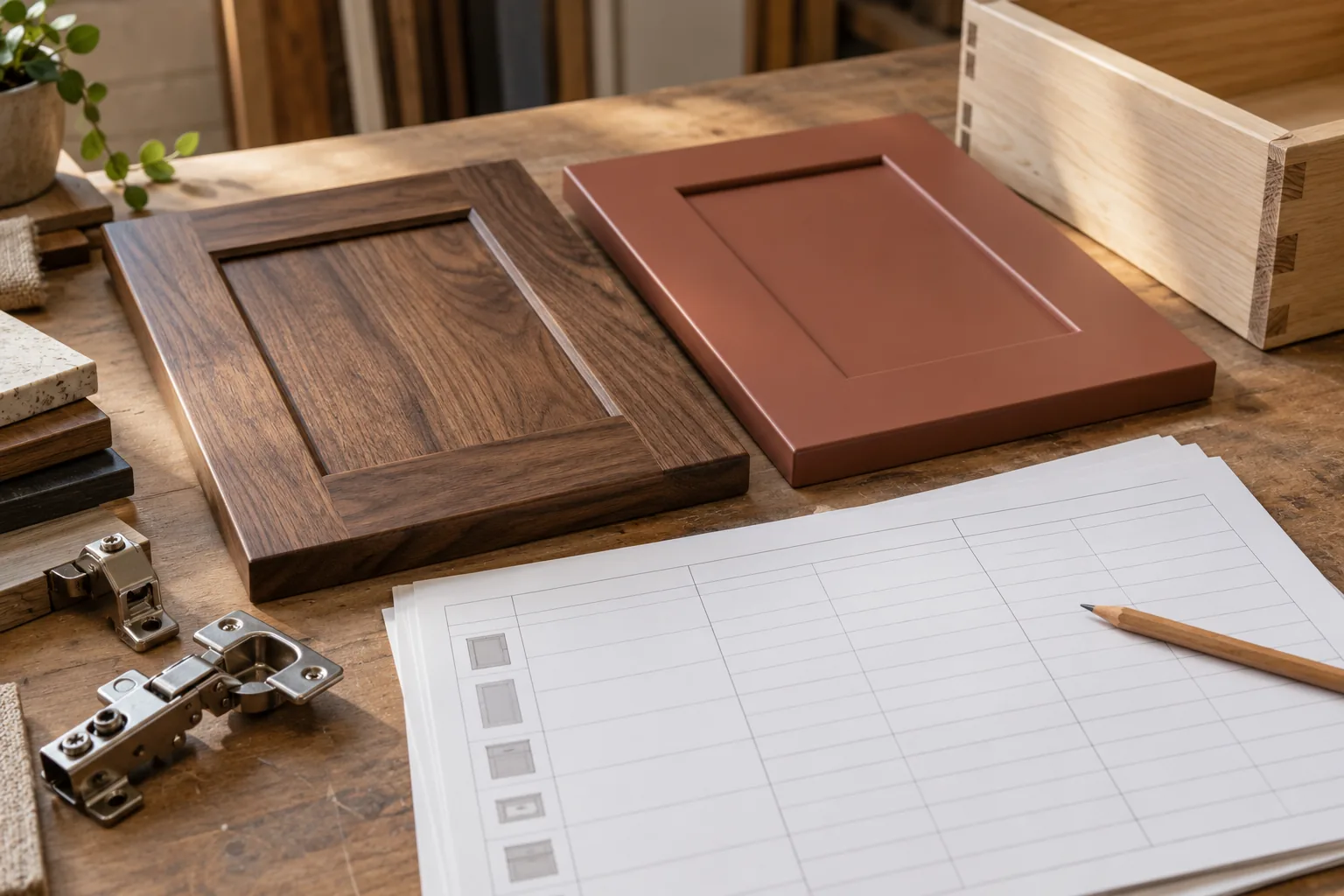
For each room, write the storage function you want before naming preferred units. A kitchen buyer may want easier access to cookware; a vanity buyer may prioritize drawers for smaller items. These are hypothetical priorities, not observations about Williamsport homes. They help explain why one configuration is being considered over another.
Turn the priorities into a unit schedule with quantities, types, configurations and finish preferences. Include panels, fillers, trim and accessories where relevant. Mark unresolved sizes rather than selecting numbers just to complete the list. If two arrangements serve the same priority differently, give each alternative a clear identity.
In the hypothetical two-room project, matching door style could be a shared preference while the product lists remain distinct. Ask whether the actual offered kitchen and vanity products meet that preference instead of assuming the seller supplies one matching line for both. Compare the named products and component inclusions. A vanity cabinet only offer and a complete kitchen unit schedule do not become one standard package because they share a color reference.
Assign measurement, approval and receiving roles by room
Gather the room measurements and retained appliance information needed for each arrangement. The IKEA US planning guide asks buyers to bring those inputs for kitchen planning. For a vanity, the supplied Home Depot guide identifies actual space, plumbing positions and door swing as fit subjects. Neither guide inspects your property or approves the proposed order.
Identify who verifies final measurements and who approves the product schedule. The purchaser may also be the approver, but that should be explicit. If a separately engaged professional checks compatibility or fit, ask what information that person requires and which version it is reviewing. This site does not perform field measurements or certify the design.
Then name the receiving contact and proposed destination. If rooms are at different readiness stages, ask the seller whether the desired receiving sequence is available and what its actual terms are. Have the property parties review package information and storage instructions. Keep responsibility for receipt separate from approval of the final dimensions; a person available to accept goods is not automatically the person authorized to approve the cabinet arrangement.
Compare cost by room and identify shared charges
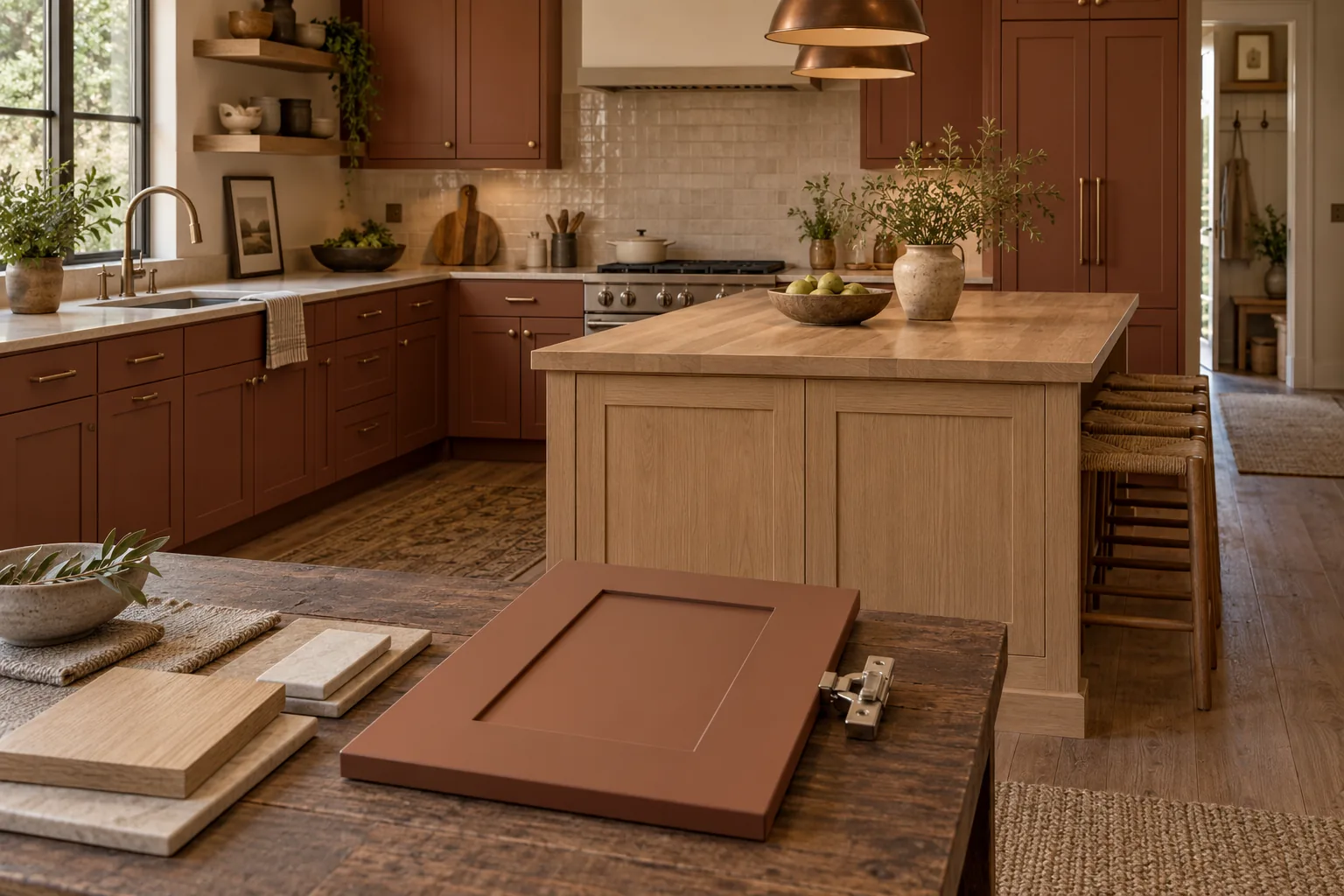
Price the product scope for each room against its own quantities and cabinet box configurations. Identify finish, panels, accessories and any vanity top or sink as actual included or separately priced goods. A combined total should still let you understand what belongs to the kitchen and what belongs to the bathroom.
Ask how freight, pickup, carrying, assembly and storage are treated. If a charge is shared across the purchase, have that stated rather than allocating it by guesswork. External labor for removal, installation, plumbing or other work needs the relevant provider's own scope. Combining product inquiries does not establish one provider for all tasks.
Compare the same room schedules and receiving assumptions across proposals. The FTC recommends written home improvement estimates that describe scope, materials and price, a useful practice for external labor comparisons. Preliminary estimates are subject to change; obtain the final offered price and included scope in a written quote. In the hypothetical combined purchase, a missing vanity top or a different receiving sequence can change the meaning of the total. Clarify those differences before deciding that the lower figure covers the complete intended purchase.
Prepare one project summary with separate room records
Your summary can name the exact project address, the purchaser and the rooms involved. Under it, give each room its own current schedule, drawing reference and unresolved questions. Date the records so a later proposal can identify which arrangement it used. A single project message need not collapse several room decisions into one ambiguous list.
For a first inquiry, state the next question for each room. The kitchen might need an itemized comparison while the vanity needs a component compatibility answer. Explain those differences and identify any shared preferences. Keep a copy of what you submit so a later change can be traced to the affected room rather than rewriting the entire project history.
Before purchasing, reconcile the actual seller proposals with the approved documents and receiving arrangements. Resolve final dimensions and obtain the seller's terms for substitutions, discrepancies or later changes as applicable. Town planning context remains one source for its proper subject; the accepted purchase documents describe the actual goods and commitments. A clear Williamsport record gives you a way to proceed through distinct decisions while keeping each room's open questions visible until the responsible parties answer them.
Inquiry process
From buying questions to a possible supplier quote
Sending an inquiry does not reserve products or book work.
Describe the purchase
Include project ZIP, room, approximate cabinet list and preferred timing.
Clarify requirements
Identify assembly, access, measurements and any separately arranged labor.
Confirm referral availability
An inquiry can be referred only if a suitable seller accepts the location and product request.
Review seller terms
Confirm the final drawing, itemized price, payment, delivery and return terms directly before ordering.
Illustrative product choices
Illustrative product visualizations, not completed work, local properties or supplier facilities.
Local buying information
Other local buying guides
Questions
Williamsport Questions
What does the Williamsport plan source contribute to this guide?
It establishes that the town maintains a municipal comprehensive plan page and publishes materials through Town Hall. That is community context. The buying inference is to identify room, address, receiving and measurement approval details separately, rather than expecting a town document to describe your product purchase.
Can my kitchen and vanity be at different planning stages?
Yes. Keep separate schedules and state the next question for each room. A checked kitchen arrangement does not resolve a vanity fit question. If you want coordinated purchasing or receipt, ask the actual seller whether it accepts that arrangement and what terms apply.
How do I compare a combined cabinet proposal?
Check the goods room by room, including vanity components and kitchen accessories, then identify shared freight or other charges. Match the document versions and receiving assumptions. A combined total is useful only when you can understand what it includes for each part of the purchase.
Who should approve the order if another person will receive it?
Identify the purchaser and final schedule approver separately from the receiver. The receiver needs the accepted order and reporting instructions, while fit and purchasing approval require their assigned checks. One person can hold several roles if those responsibilities are explicitly agreed.
Talk to us about your project in Williamsport
Describe the purchase and project ZIP in Hagerstown. Supplier acceptance and any referral are confirmed separately; no visit or quote is booked by this form.
Calls only, we do not receive text messages.