
Location And Receiving Review in Hagerstown
Bring your project details together before considering a cabinet purchase.
Send my cabinet inquiry
Or call (562) 203-3232. Calls only, we do not receive text messages.
A cabinet purchase around Hagerstown needs more than a locality name. The room address, any separate receiving location and the people responsible for each decision all belong in the buying record. Hagerstown Cabinet Exchange uses its local guides to help you organize those details and recognize which property questions need answers before an order can be evaluated.
- Independent buying guidance
- Product inquiries
- Seller availability confirmed separately

Project location changes the buying questions
The guides cover different kinds of local context in Washington County: Funkstown, Maugansville and Williamsport. Their inclusion does not establish seller coverage. This independent site records submitted form information for the owner to review, without automatically sending it to sellers or guaranteeing a response. Use the locality material to sharpen your questions, then verify the specific address and proposed purchase.
About Hagerstown Cabinet Exchange
Know who handles each part
Independent cabinet buying information and quote-request service. We do not manufacture, stock or install cabinets. A referral, supplier response, appointment or purchase is not guaranteed. Product availability, delivery and installation must be confirmed directly with the seller or separately engaged contractor.
Local buying information
Local buying guides
Separate the project address from the receiving address
Begin with the address where the cabinets will be used. Include the relevant room or unit identifier when a property has more than one project space. Then state where you want the products received. Those addresses may be the same, but recording them separately prevents a mailing address or another project location from being mistaken for the delivery destination.
A hypothetical purchaser might live in Hagerstown while buying cabinets for a property elsewhere in Washington County. The buyer's contact address belongs in the contact record; the kitchen's location belongs in the product and property record. If the buyer proposes receipt at a separate storage location, that needs a third clearly labeled entry. Ask the seller to assess the intended receiving destination, not whichever address happens to appear first.
Name a person for each responsibility. Who can answer questions about the room? Who approves the product schedule? Who can receive and inspect the order? One person may take several roles, but the roles still need to be explicit. Include a way to identify the correct room and drawing without assuming that a carrier or seller knows the property.
Funkstown: identify the address and decisions outside the product quote
The Funkstown guide starts with a municipal identity rather than a property assumption. The Maryland State Archives record lists Funkstown as a Washington County municipality incorporated in 1840. Knowing the locality helps describe where the proposed purchase belongs, but that record does not identify requirements for the buyer’s address or authorize a change to the room.
For a project involving cabinets and other alterations, write two connected records: the goods being compared and the conditions that must be resolved before their dimensions can be approved. This is a purchasing method, not a claim about local approval exemptions. For example, a hypothetical request could compare replacement storage in the current room with an alternative depending on a changed opening. Give the alternatives different version names and mark the affected units so the seller cannot mistake a conditional drawing for the confirmed one.
Address questions to the authority or property professional responsible for the actual proposed work. Provide the location and scope, and ask which decisions need confirmation before the cabinet schedule can be finalized. Keep their answer with the project record. If another alteration changes the usable space, update the dimensions and cabinet quantities together. Separating these decisions allows a useful product comparison to begin while keeping an unsettled property change visible to the buyer.

Maugansville: use the place name, then identify the actual property
The Maugansville guide uses Washington County's adopted 2040 plan maps. The maps label Maugansville and warn that they illustrate the plan, are subject to source changes and should not be used for other purposes. That is a verified observation about the maps, not a property record.
The practical buying inference is to use the community name as useful context while providing the exact project and receiving addresses independently. A locality label helps a reader orient the request; it cannot supply missing room details or determine a property's jurisdiction. When a specific property question matters, use the relevant property or official record for that question.
Keep the information layers distinct in your notes. A community name tells you where to look for the local guide. A checked address identifies the proposed destination. Measurements and photographs describe the room. The seller's written terms establish whether it accepts that destination and what receiving arrangement it proposes. Combining these layers into a statement such as delivery in Maugansville loses the details needed to evaluate an actual order.
Williamsport: turn municipal context into project questions
The Williamsport guide draws on the Town of Williamsport's comprehensive plan page. The supplied research confirms that the town maintains that municipal page and publishes plan materials through Town Hall. This gives the guide an official source of community context without making a claim about the condition of an individual kitchen.
The practical buying inference is to identify the room, order address, receiving responsibility and person who approves the final measurements as separate project details. Town planning material may help you frame a local question, but the cabinet schedule still needs to describe your intended purchase. A named town does not determine the size of the sink base, the available storage location or the scope of a seller's offer.
Ask property contacts about the actual constraints they administer. If a building has access arrangements or storage rules, obtain those arrangements directly rather than projecting them from a municipal document. Record who supplied the information and when it was checked. That creates a usable question for the seller: whether its proposed products and receiving terms can be accommodated under the conditions you have described.
Record access and storage as observable details
Replace general descriptions such as easy access with details the responsible parties can assess. Identify the intended unloading point, entrance, route and storage area. Note stairs, elevators or restricted openings if they actually apply to your property, and distinguish measured information from estimates. No neighborhood description can answer these questions for every address.
Request package dimensions and handling instructions for the products being considered. A final cabinet dimension and a shipping package dimension answer different questions. Ask whoever will handle or store the products to review the actual information against the proposed route and location. Use the manufacturer's instructions for storage rather than assuming any empty room is suitable.
Plan the receiving record too. Identify who will compare delivered items with the order, where the paperwork will be kept and how visible discrepancies will be documented under the seller's terms. If another person is receiving on your behalf, give them the current schedule and the contact they should use for questions. A useful locality inquiry connects a real destination to a prepared person, rather than promising that delivery will be straightforward.
Compare location related cost and obtain address specific terms
Keep location related charges beside the same cabinet schedule used for product comparison. Quantities, box configuration, finish, panels and accessories define the proposed goods. Freight, pickup, carrying, storage or redelivery charges describe other parts of the purchase and should be shown separately when relevant. External labor for assembly or installation requires its own provider scope.
Ask what destination and handoff the freight proposal actually prices. A charge for one receiving address should not be assumed to apply to a different address later. If the destination changes, obtain the seller's revised terms and record the effect on your comparison. A missing carrying or storage figure remains unknown until clarified; it should not be treated as an included service.
Before ordering, ask the seller to confirm acceptance of the specific purchase and address, available receiving options and the terms for discrepancies. Preliminary estimates are subject to change, and the final written quote establishes the offered price and scope. The FTC's written estimate guidance supports checking materials, scope and price for separately contracted home improvement work. The same careful separation helps you avoid confusing a cabinet product subtotal with the entire project budget.
Illustrative product choices
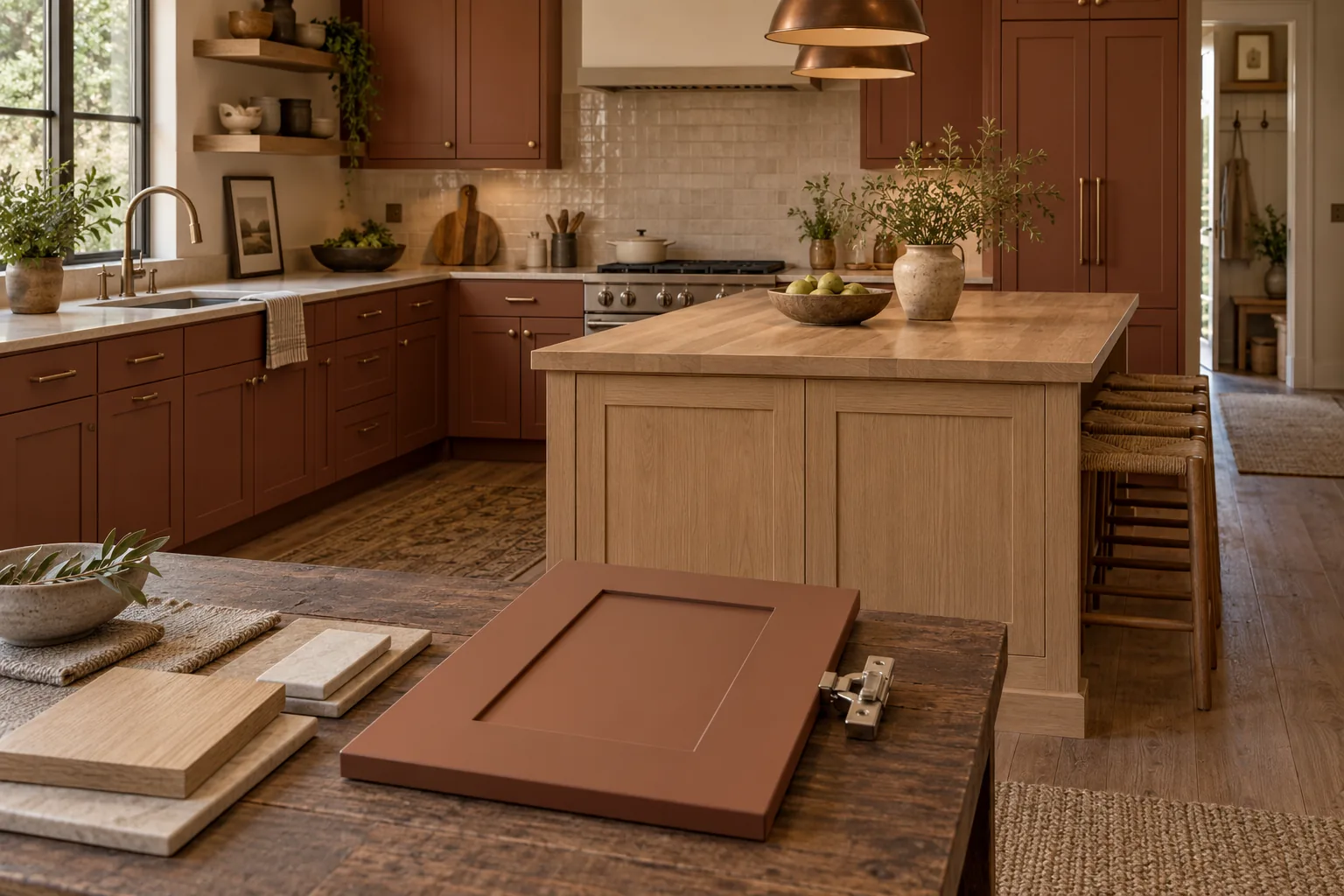
Illustrative product visualizations, not completed work, local properties or supplier facilities.
Questions
Coverage questions
Does appearing in a locality guide mean a seller will deliver there?
No. A guide identifies a topic and local source context. Ask the actual seller whether it accepts your order and receiving address, and obtain the proposed handoff and charges in its written terms. A locality listing cannot make that decision.
Why provide two addresses if the cabinets are for one kitchen?
The kitchen address identifies the project. A separate receiving address identifies where the order is intended to arrive. If they differ, label both clearly and explain who can receive the products. Your personal mailing address should not substitute for either one.
Who should confirm building access or storage conditions?
Ask the owner, manager or other responsible property contact for the conditions that actually apply. Have the people handling the order review its package information and instructions. Record the source of the access information so an unresolved question has a specific person to answer it.
Can a planning document establish that my cabinet project needs approval?
The documents cited here provide their stated local context. They do not decide the complete approval requirements for your address and scope. If your project includes work that raises that question, confirm it with the appropriate authority or professional before relying on a purchase assumption.
Talk to us about your project
Describe the purchase and project ZIP in Hagerstown. Supplier acceptance and any referral are confirmed separately; no visit or quote is booked by this form.
Calls only, we do not receive text messages.